
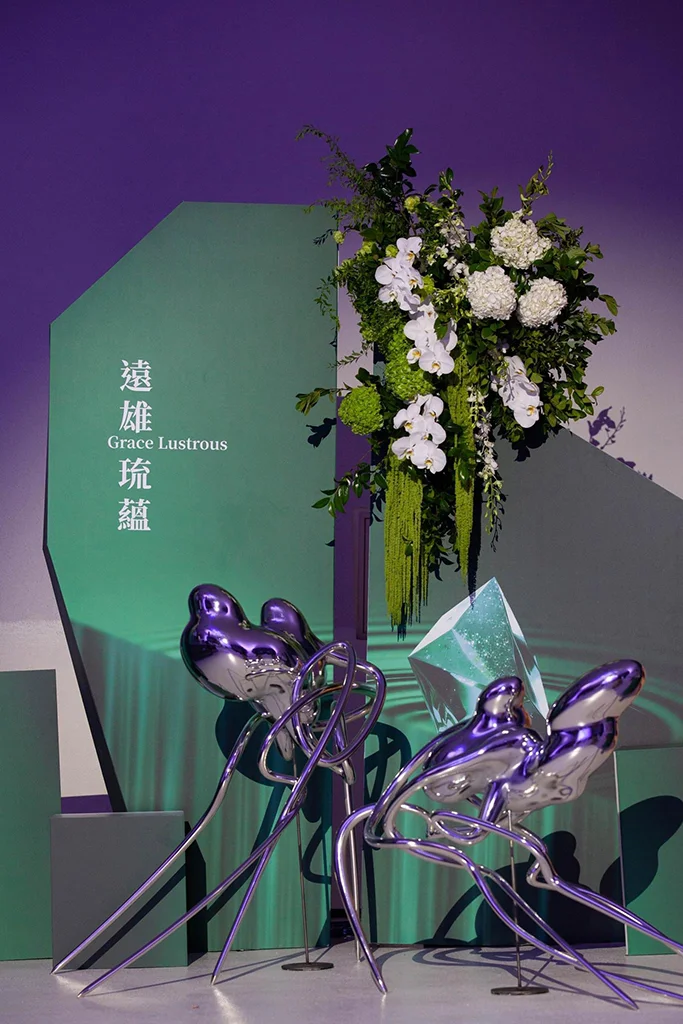
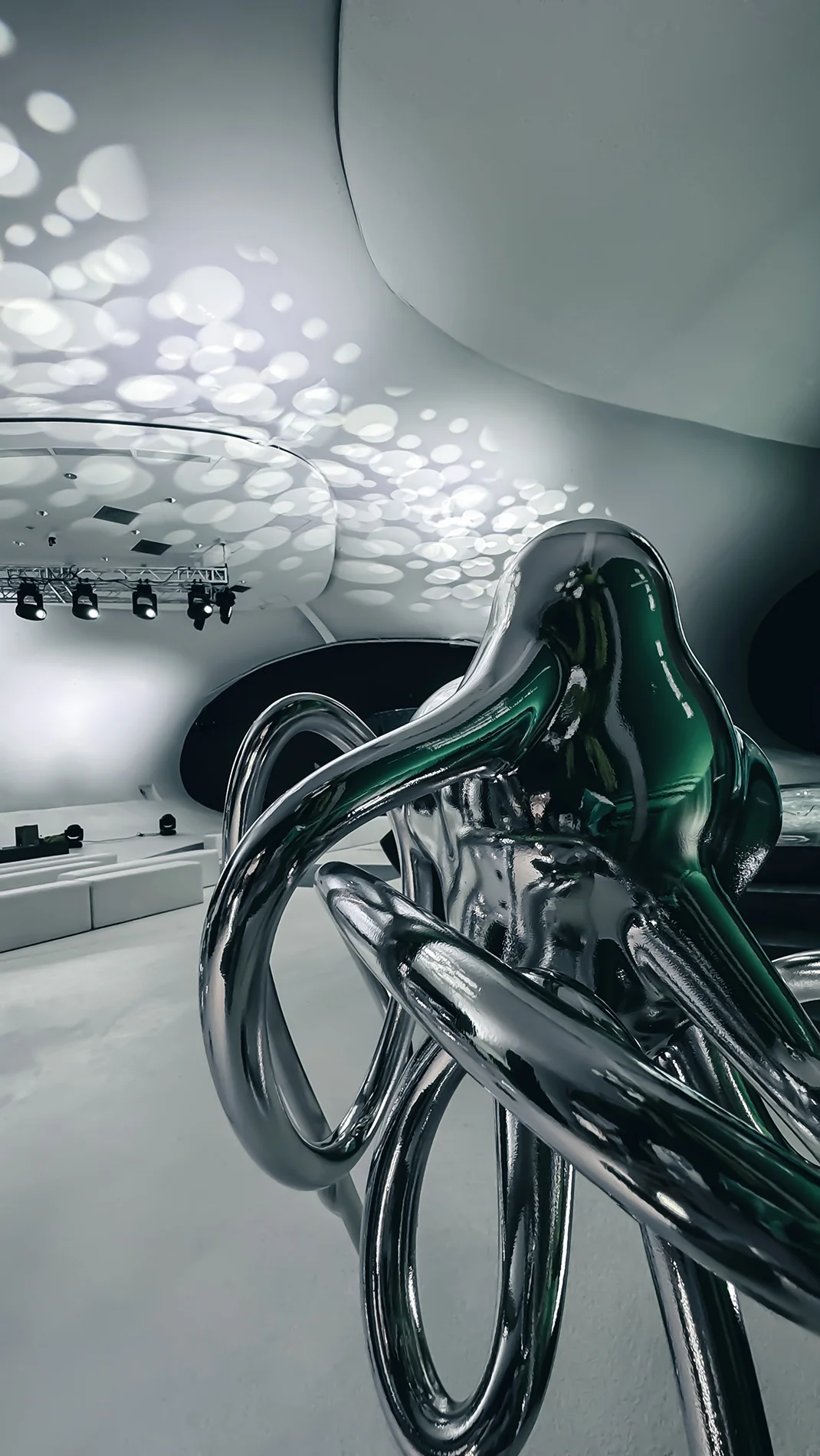
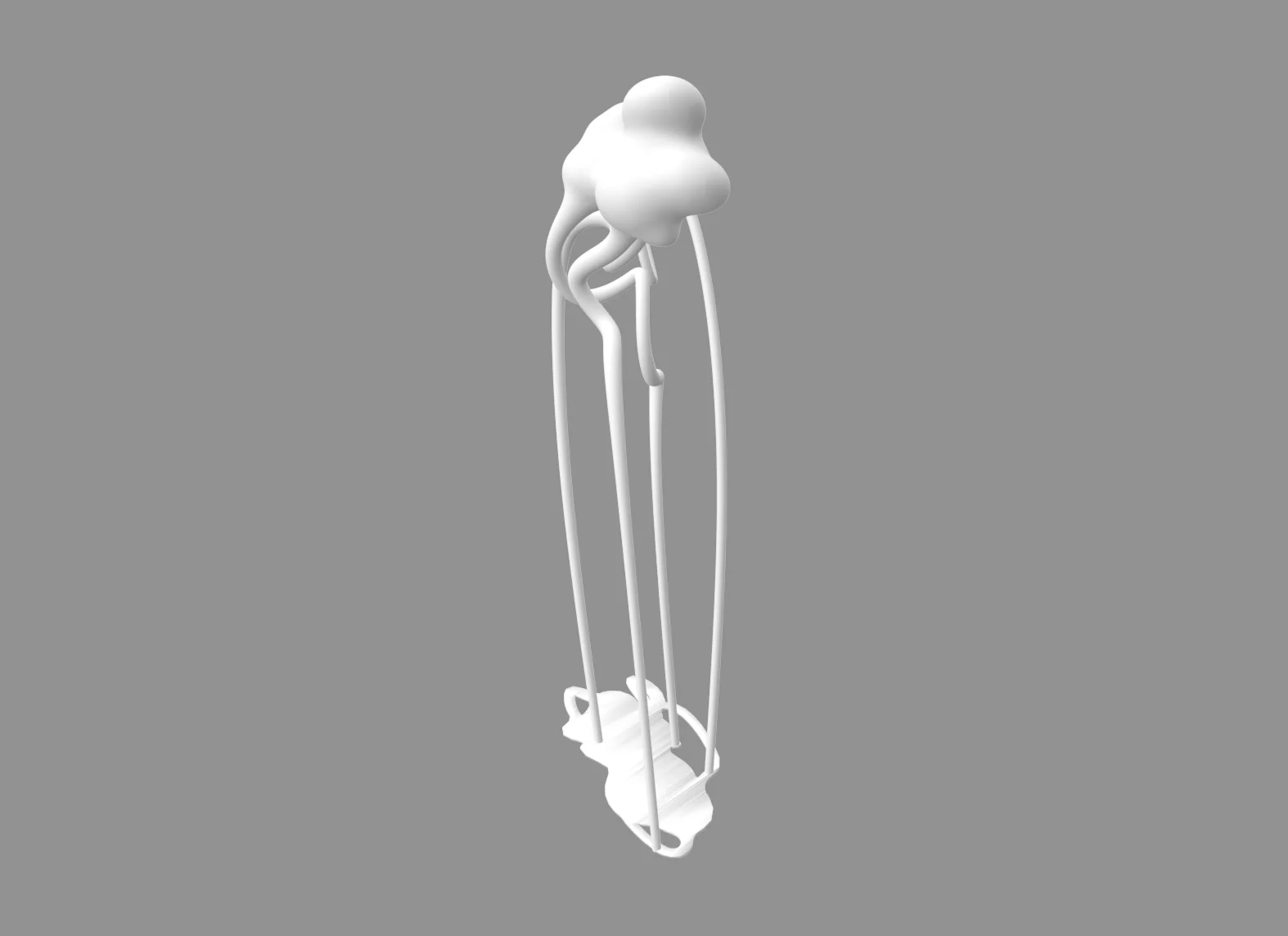
A pure substance is commonly understood through three phases—solid, liquid, and gas. A supercritical fluid emerges when temperature and pressure exceed the critical point, where the densities of gas and liquid converge and collapse into a single, homogeneous phase. Once matter enters this state, it inhabits an in-between stability: it can no longer be cleanly classified as either liquid or gas, yet it carries the signatures of both.
It behaves like a gas—low surface tension, low viscosity, high diffusivity, compressible, capable of rapid discharge—while simultaneously holding the gravity of a liquid—high density, high solvency, a tangible, weight-bearing flow. It is paradox made material: a unified phase that refuses a single category, a stable form born from exceeding limits.
In art-making, we repeatedly return to one question: how does stability coexist with movement? Supercritical fluid becomes a precise metaphor for that pursuit. Its “stability” is not softness—it is forged by extremity: high pressure, high heat. Under conditions that would normally create chaos, matter holds a coherent state. This is why it resonates with contemporary life: we long for steady work, reliable relationships, a home that does not collapse—small assurances against an uncertain world. Yet, as the supercritical state reminds us, stability is never a permanent monument. Change is inevitable; control has edges; the search for steadiness can itself generate new pressures.
By linking the physics of supercritical fluid to the human desire for a stable life, the work invites reflection on the delicate equilibrium between the fixed and the shifting. It asks viewers to reconsider what they call “secure,” what they choose to hold onto, and what they are willing to let transform—until a new, quietly resilient phase of living becomes possible.
A pure substance is commonly understood through three phases—solid, liquid, and gas. A supercritical fluid emerges when temperature and pressure exceed the critical point, where the densities of gas and liquid converge and collapse into a single, homogeneous phase. Once matter enters this state, it inhabits an in-between stability: it can no longer be cleanly classified as either liquid or gas, yet it carries the signatures of both.
It behaves like a gas—low surface tension, low viscosity, high diffusivity, compressible, capable of rapid discharge—while simultaneously holding the gravity of a liquid—high density, high solvency, a tangible, weight-bearing flow. It is paradox made material: a unified phase that refuses a single category, a stable form born from exceeding limits.
In art-making, we repeatedly return to one question: how does stability coexist with movement? Supercritical fluid becomes a precise metaphor for that pursuit. Its “stability” is not softness—it is forged by extremity: high pressure, high heat. Under conditions that would normally create chaos, matter holds a coherent state. This is why it resonates with contemporary life: we long for steady work, reliable relationships, a home that does not collapse—small assurances against an uncertain world. Yet, as the supercritical state reminds us, stability is never a permanent monument. Change is inevitable; control has edges; the search for steadiness can itself generate new pressures.
By linking the physics of supercritical fluid to the human desire for a stable life, the work invites reflection on the delicate equilibrium between the fixed and the shifting. It asks viewers to reconsider what they call “secure,” what they choose to hold onto, and what they are willing to let transform—until a new, quietly resilient phase of living becomes possible.
Hsin Lee’s work has a rare ability: she makes the invisible feel structurally real. Working with mirror-polished metals, titanium finishes, 316 stainless steel, nylon, and mixed media—often edged with the luster of jewelry relief, gold leaf, and crystal-like sparkle—she translates energy, time, humidity, and conviction into forms you can actually walk around, stand before, and sense in your body. Her practice lives in the in-between: stability and flux, matter and emotion, order and metamorphosis—held in a precise, deliberate tension.
In AUSPICIOUS, five supple branches become an introverted yet curious guardian of good fortune. It brushes the water curtain, steps lightly across a still surface, and lets its reflection drift outward—so a quiet, invisible steadiness seems to settle into the site. In Supercritical Fluid, she borrows the scientific language of phase states to speak about contemporary life: a stability produced by continual change, neither liquid nor gas, yet carrying the traits of both—an exact metaphor for living inside uncertainty. And in her Rooted Legacy works, she fuses the image of the tree with jewel-like surfaces: inheritance, roots, and memory set into a form that reads at once as a collectible object and as a place for the spirit to pause.
Hsin Lee isn’t simply making objects. She’s sculpting a shared sensation—letting the weight of the everyday catch the light, turning “steadiness” into something you can approach, and allowing belief to take root, quietly, inside form.