
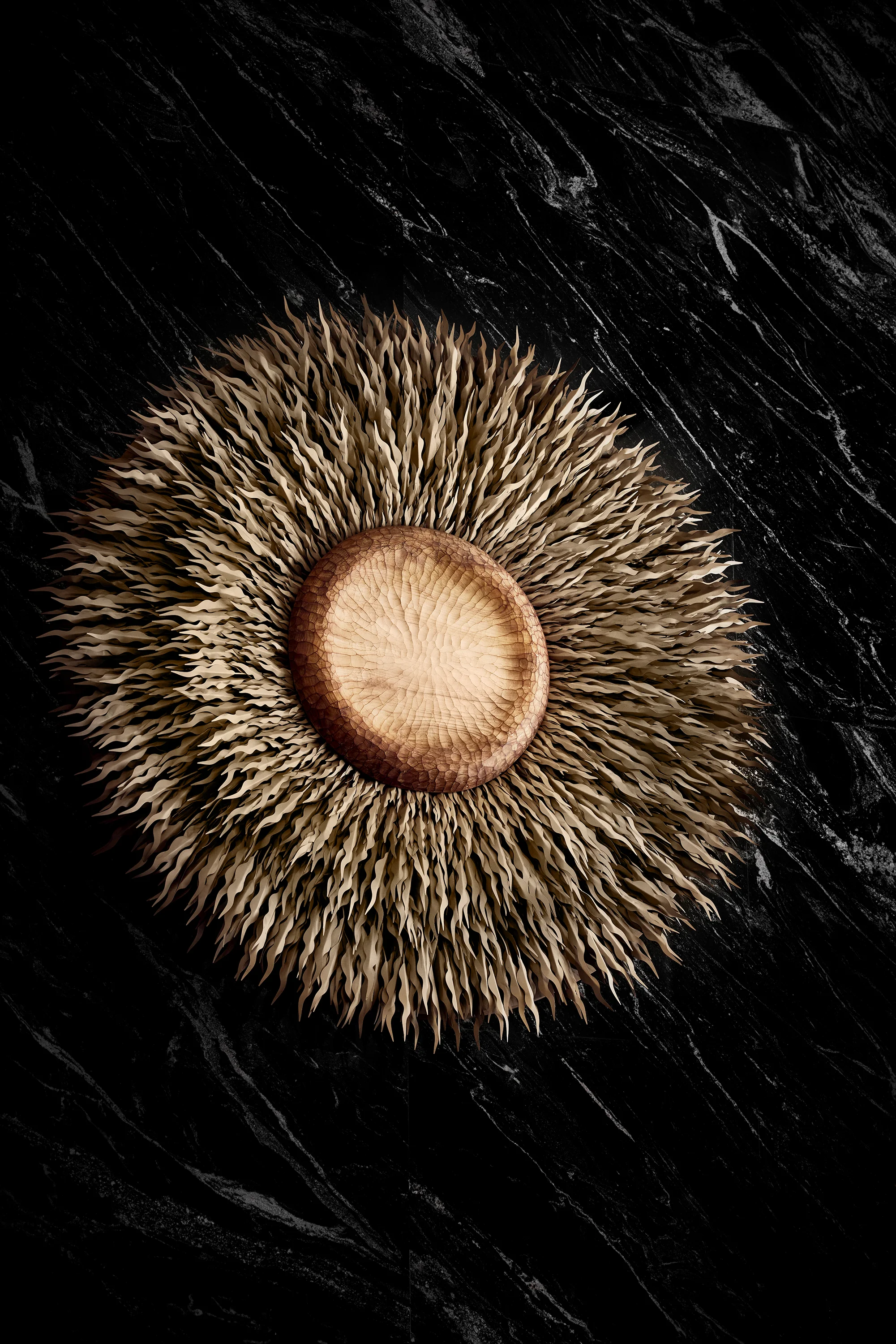
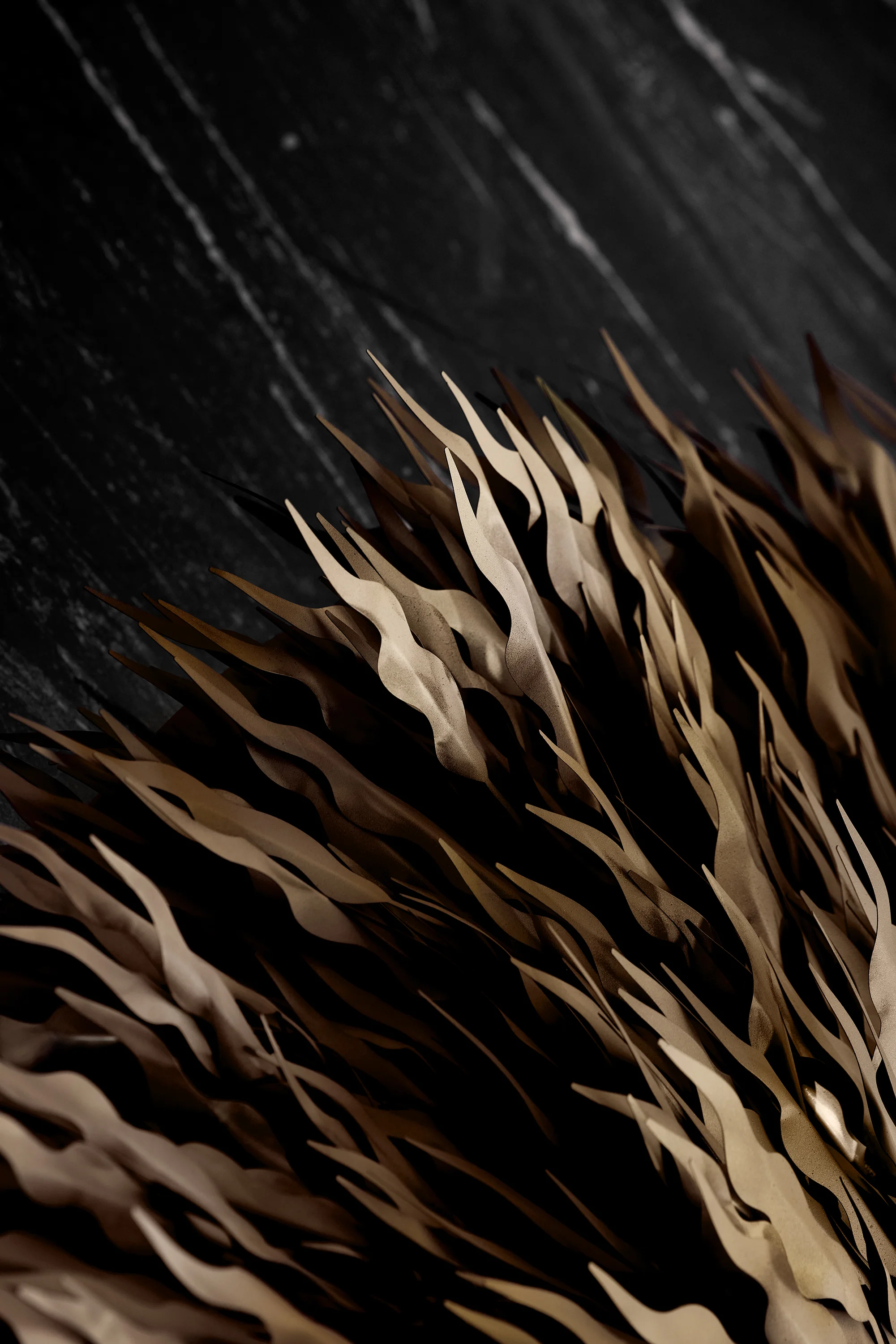
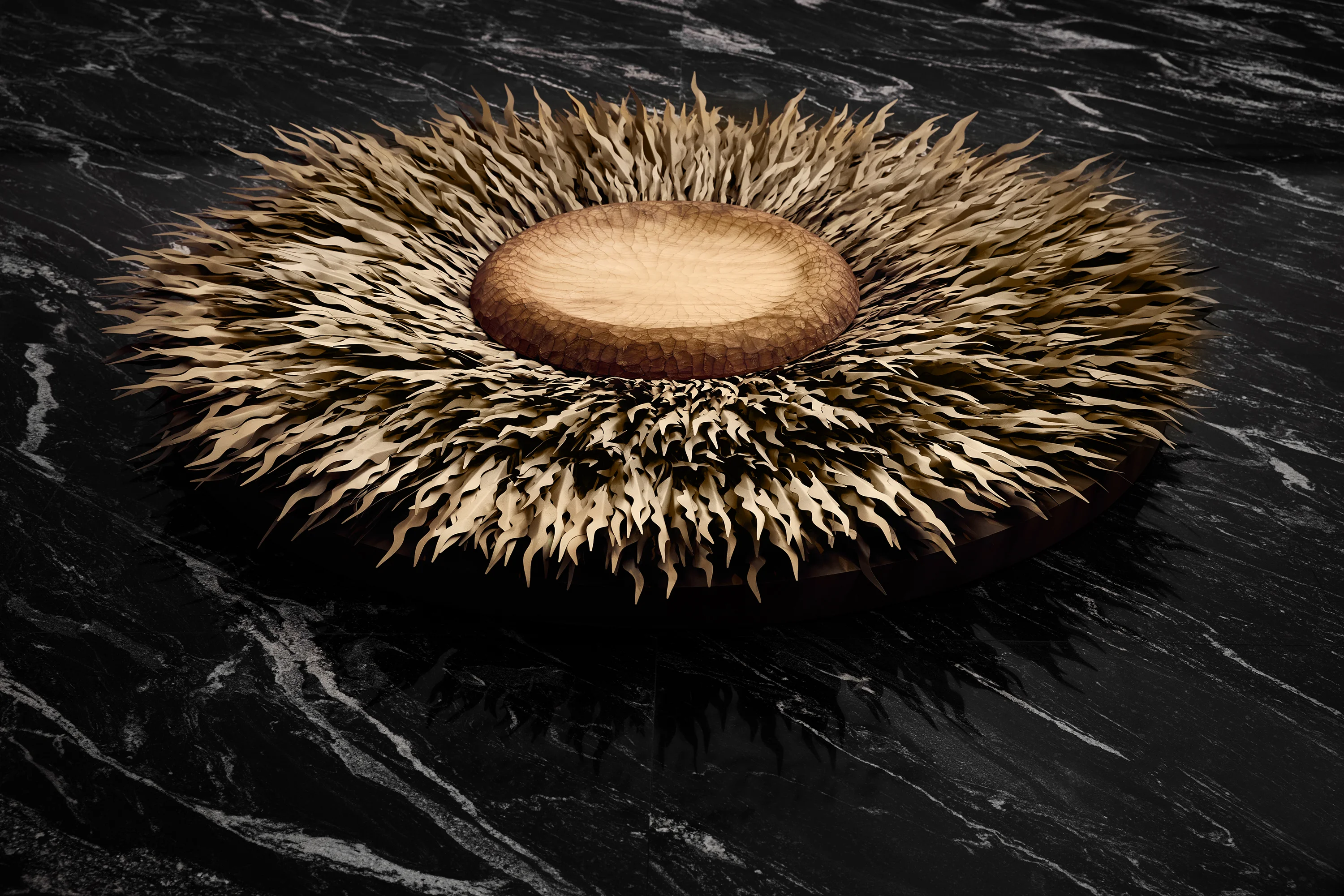
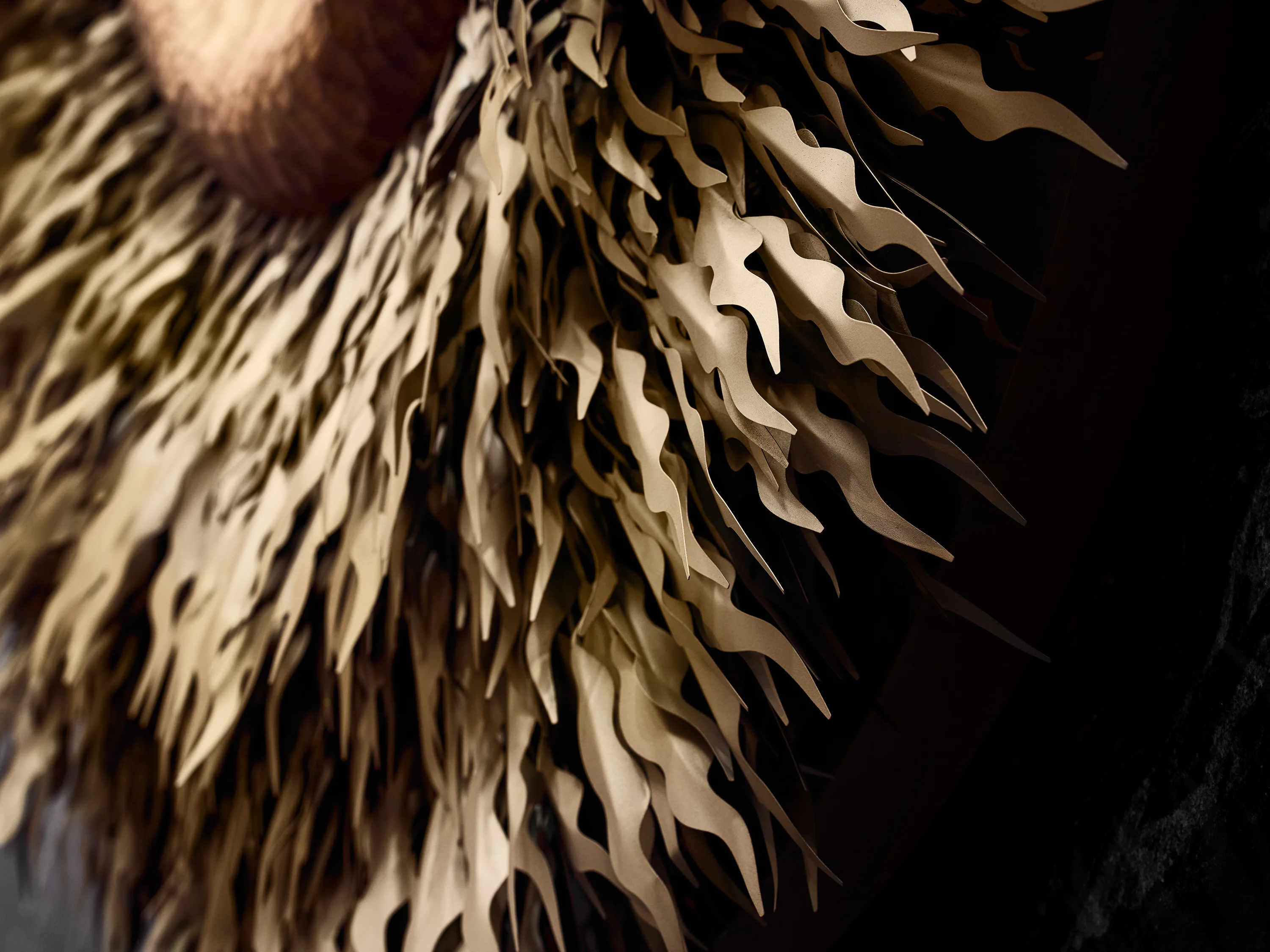
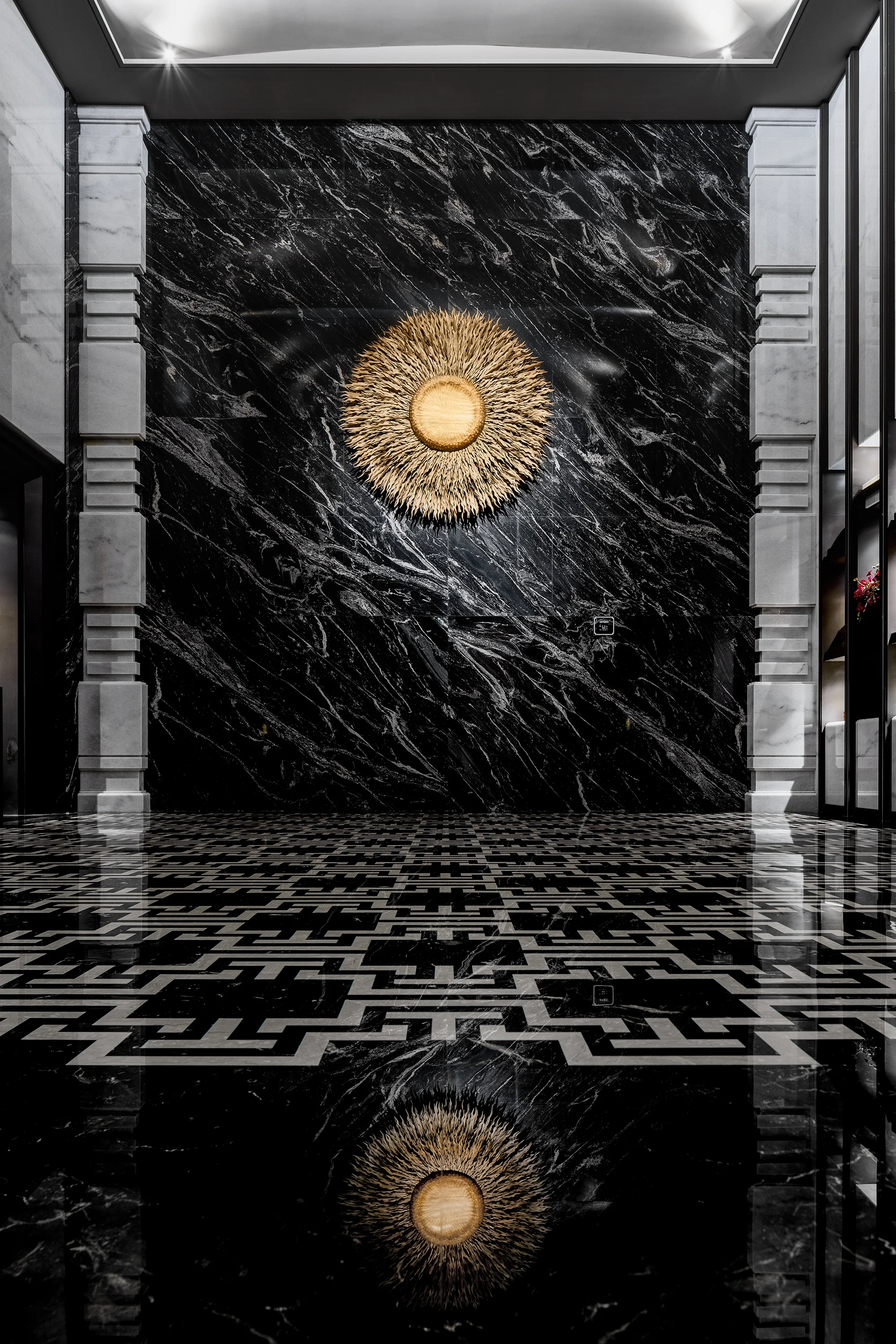
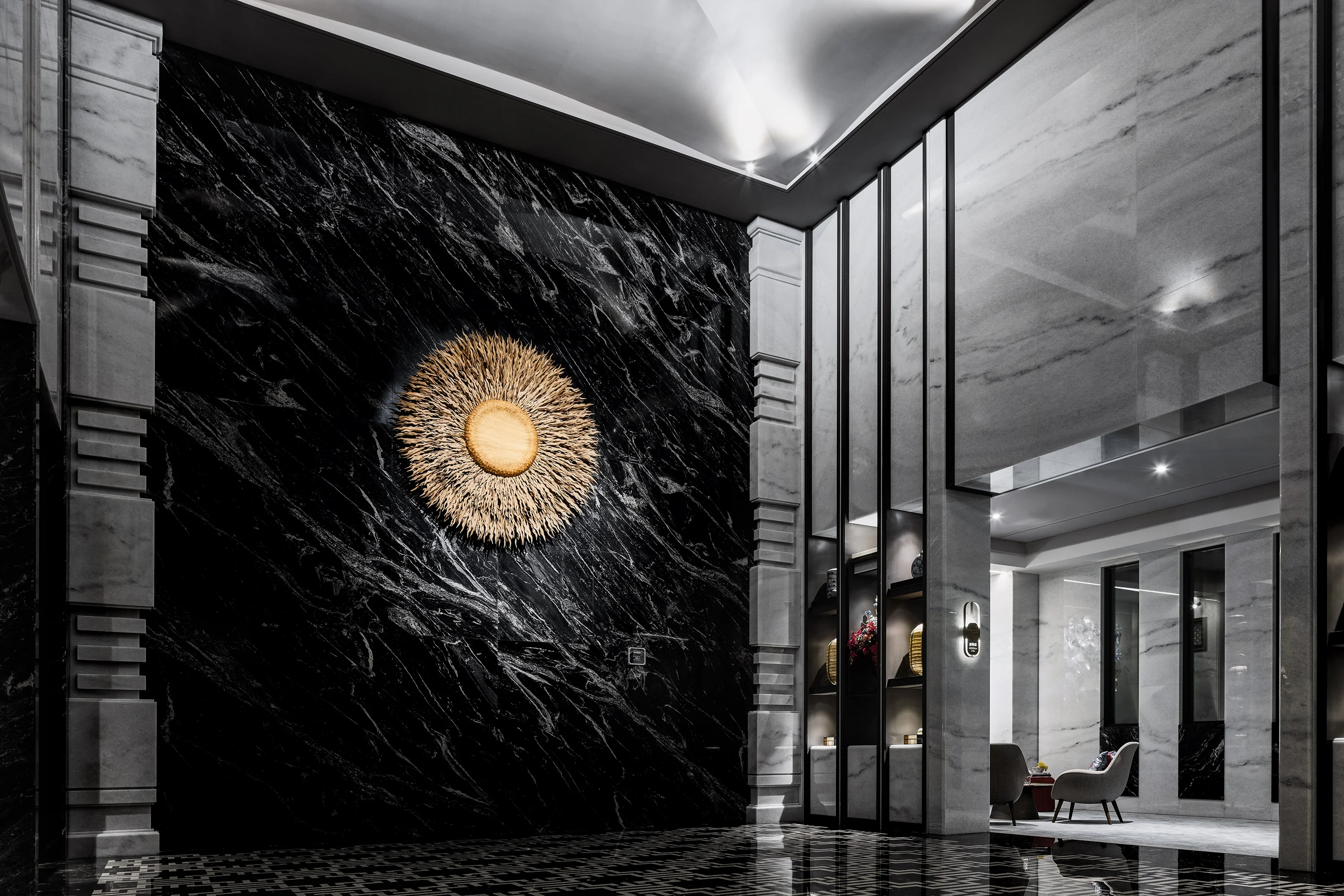
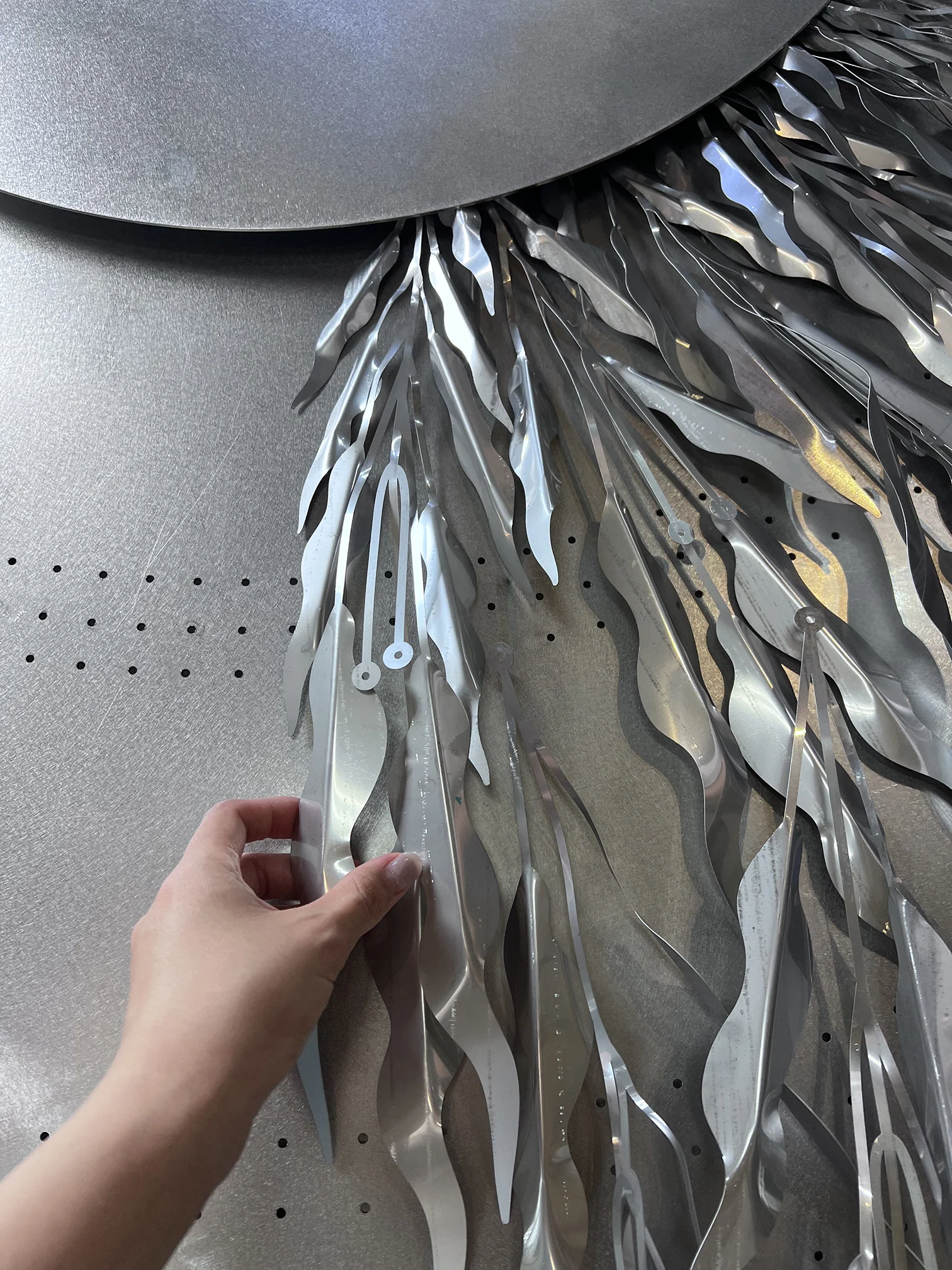
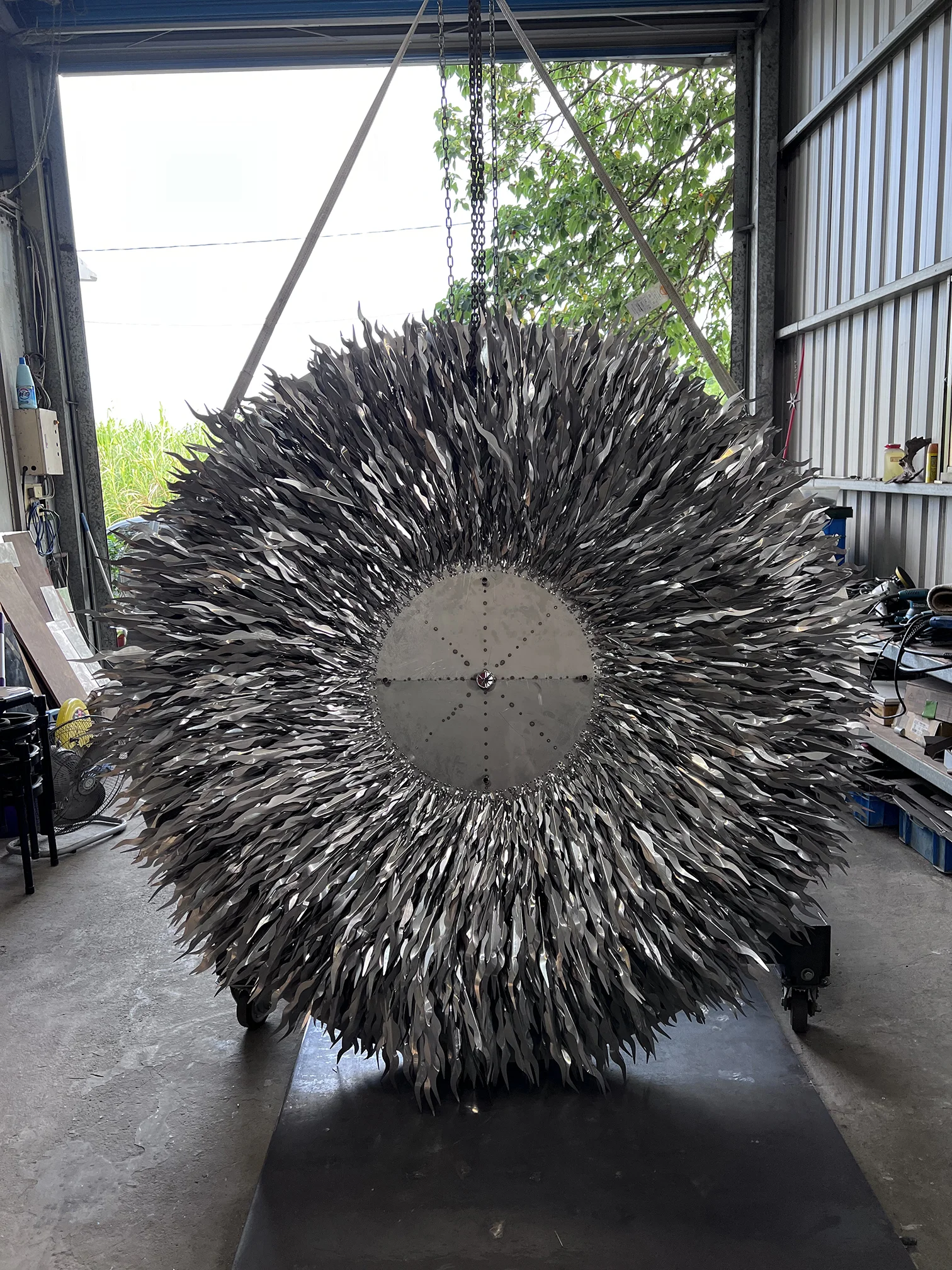
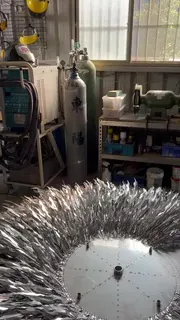
The work is anchored by a “sun carefully set in place.” At the center, a composed disc—quiet as growth rings—signals the order of time and the root of civilization. Around it, dense golden fronds flare outward like light, grain, and sharpened senses: expanding in every direction, yet never losing restraint. Peace is not the absence of turbulence; it is the capacity to keep measure within fluctuation—to gather desire into ritual, to turn anxiety into rhythm, to let strength sink quietly into the details of everyday life. The work adopts an almost votive form so that “abundance” does not become display, but an inward radiance: silent, enduring, dependable. When the viewer meets gold against the depth of black stone veining, prosperity reveals its true source—not external conquest, but the long discipline of a self and a community: order, trust, and self-limitation. Only then can the bright day endure; only then can peace be sustained.
The work is anchored by a “sun carefully set in place.” At the center, a composed disc—quiet as growth rings—signals the order of time and the root of civilization. Around it, dense golden fronds flare outward like light, grain, and sharpened senses: expanding in every direction, yet never losing restraint. Peace is not the absence of turbulence; it is the capacity to keep measure within fluctuation—to gather desire into ritual, to turn anxiety into rhythm, to let strength sink quietly into the details of everyday life. The work adopts an almost votive form so that “abundance” does not become display, but an inward radiance: silent, enduring, dependable. When the viewer meets gold against the depth of black stone veining, prosperity reveals its true source—not external conquest, but the long discipline of a self and a community: order, trust, and self-limitation. Only then can the bright day endure; only then can peace be sustained.
Hsin Lee’s work has a rare ability: she makes the invisible feel structurally real. Working with mirror-polished metals, titanium finishes, 316 stainless steel, nylon, and mixed media—often edged with the luster of jewelry relief, gold leaf, and crystal-like sparkle—she translates energy, time, humidity, and conviction into forms you can actually walk around, stand before, and sense in your body. Her practice lives in the in-between: stability and flux, matter and emotion, order and metamorphosis—held in a precise, deliberate tension.
In AUSPICIOUS, five supple branches become an introverted yet curious guardian of good fortune. It brushes the water curtain, steps lightly across a still surface, and lets its reflection drift outward—so a quiet, invisible steadiness seems to settle into the site. In Supercritical Fluid, she borrows the scientific language of phase states to speak about contemporary life: a stability produced by continual change, neither liquid nor gas, yet carrying the traits of both—an exact metaphor for living inside uncertainty. And in her Rooted Legacy works, she fuses the image of the tree with jewel-like surfaces: inheritance, roots, and memory set into a form that reads at once as a collectible object and as a place for the spirit to pause.
Hsin Lee isn’t simply making objects. She’s sculpting a shared sensation—letting the weight of the everyday catch the light, turning “steadiness” into something you can approach, and allowing belief to take root, quietly, inside form.