
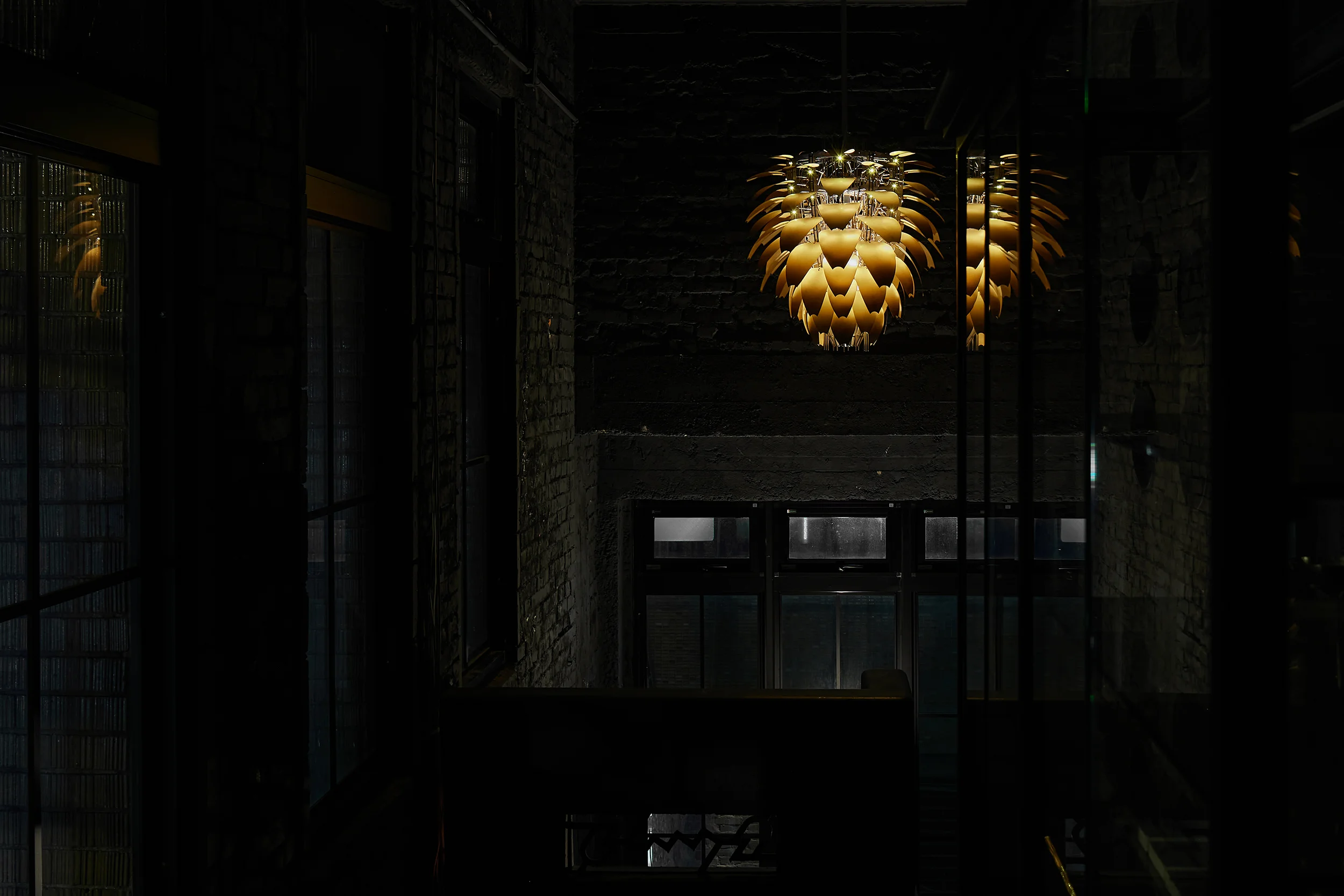
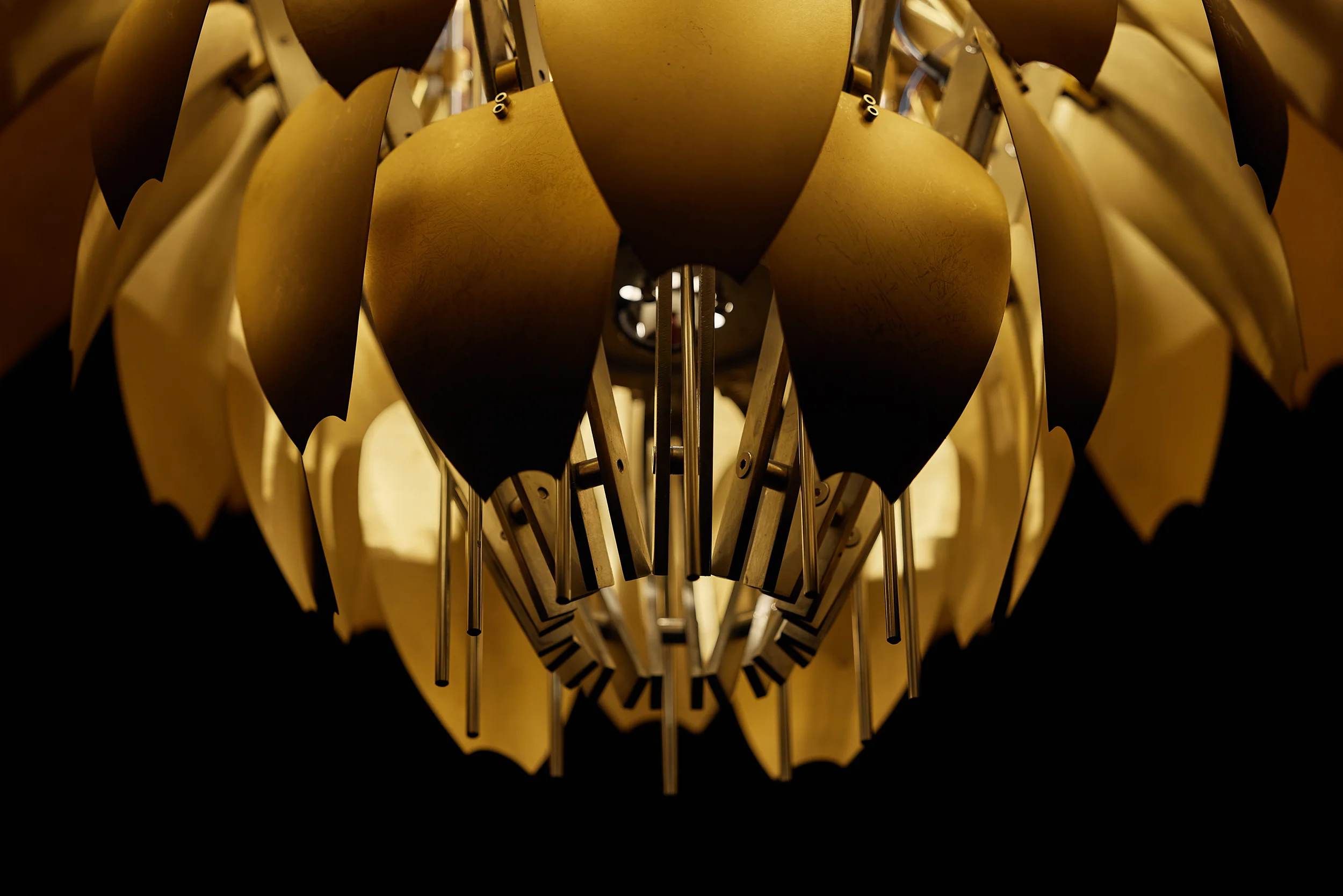
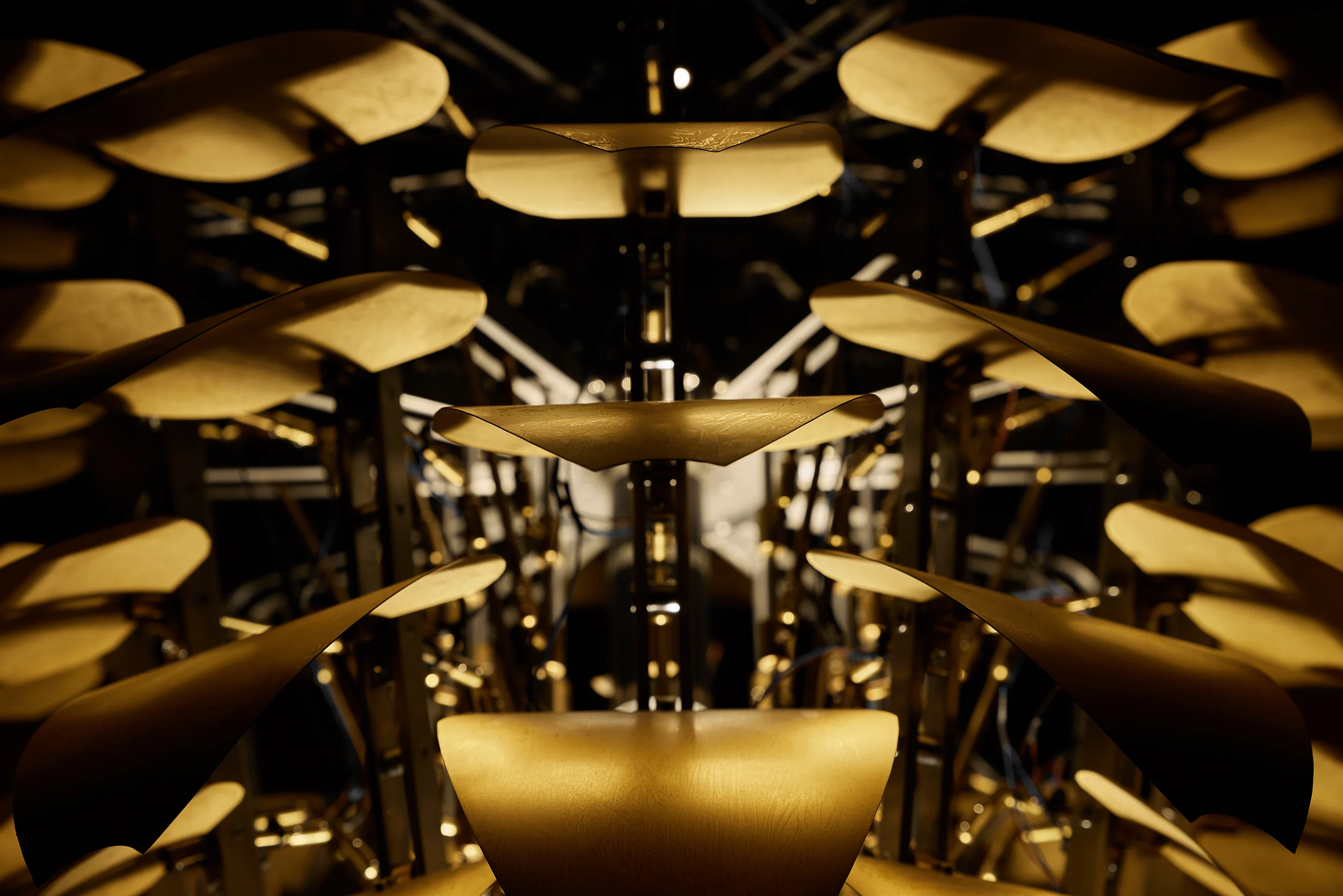
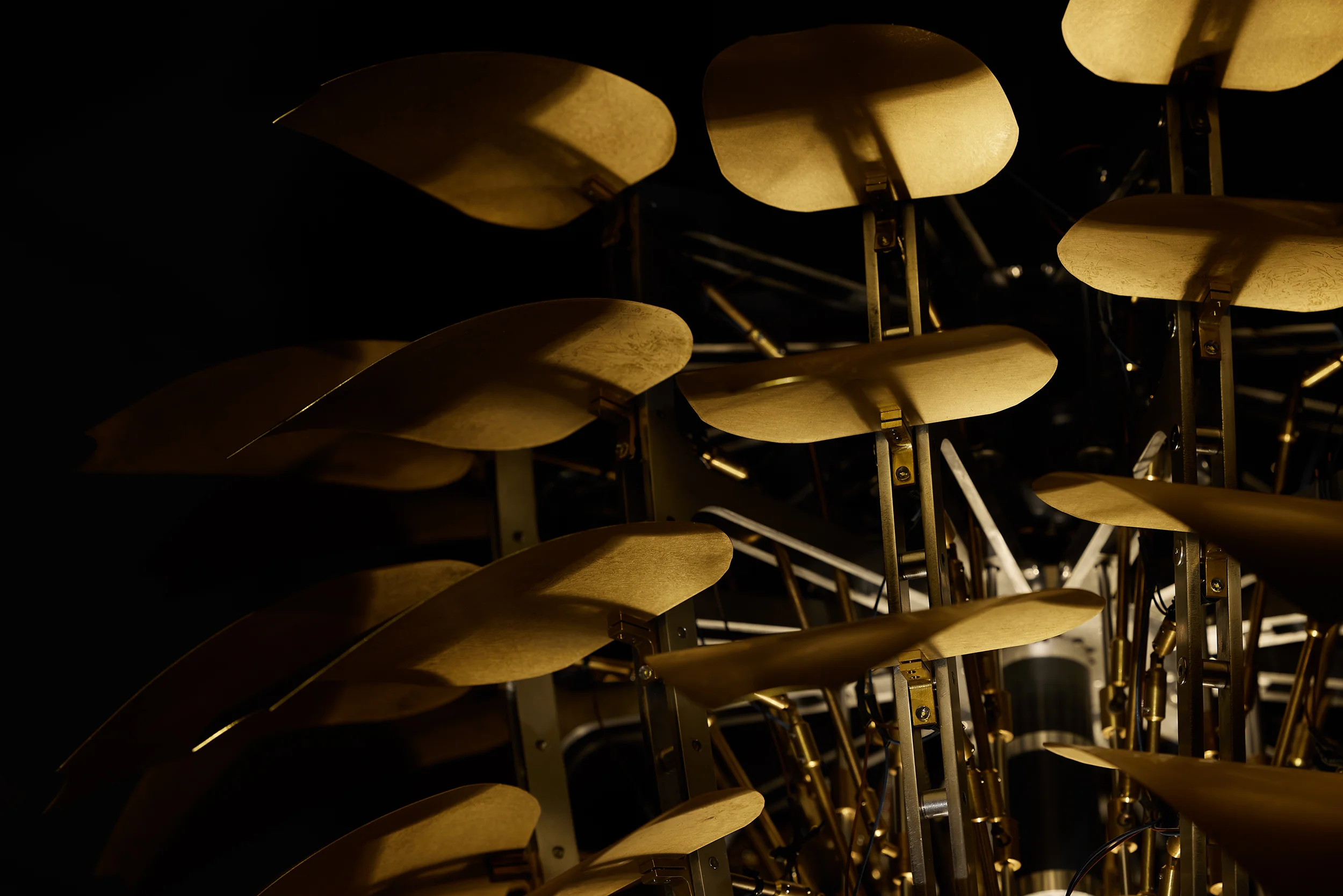
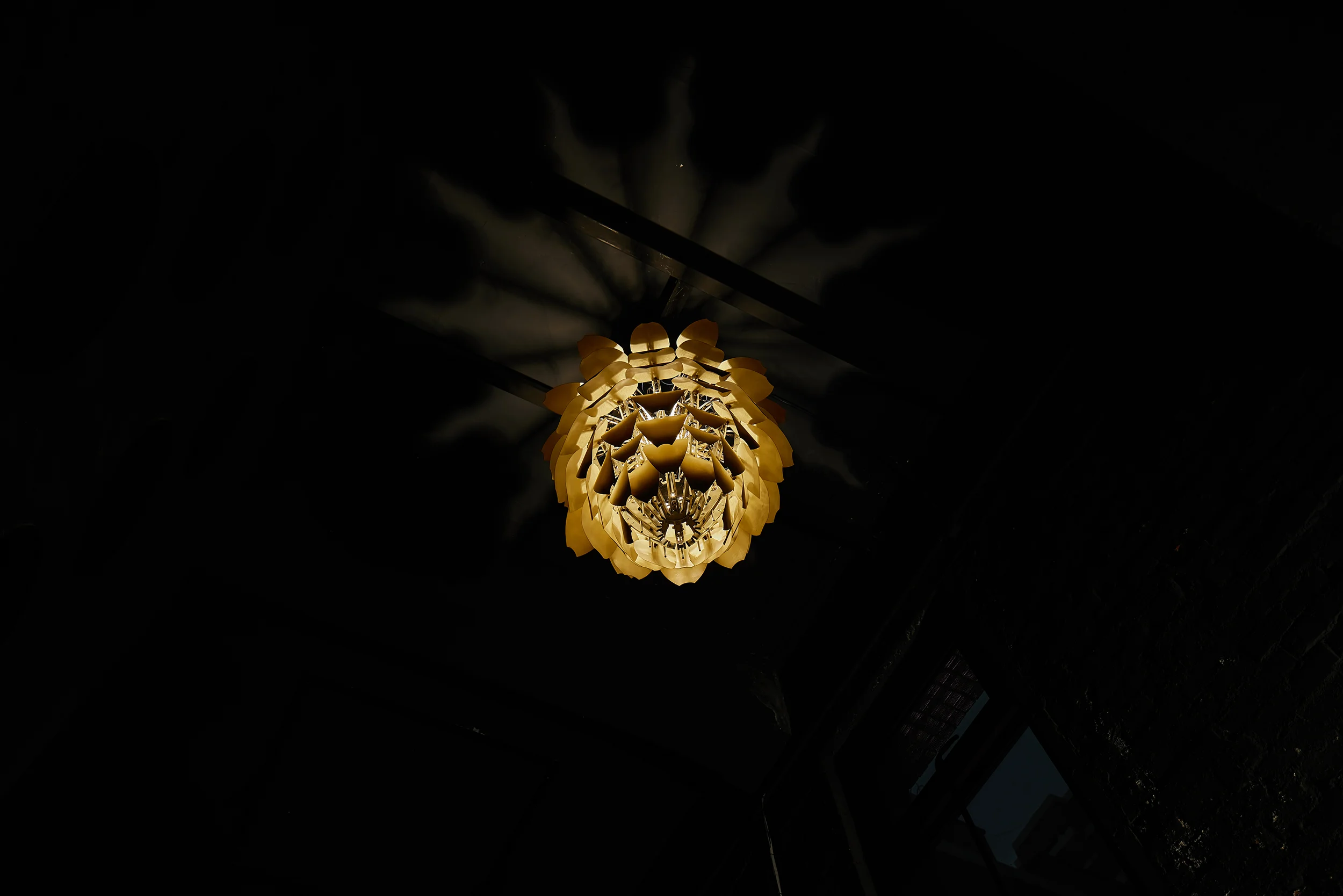
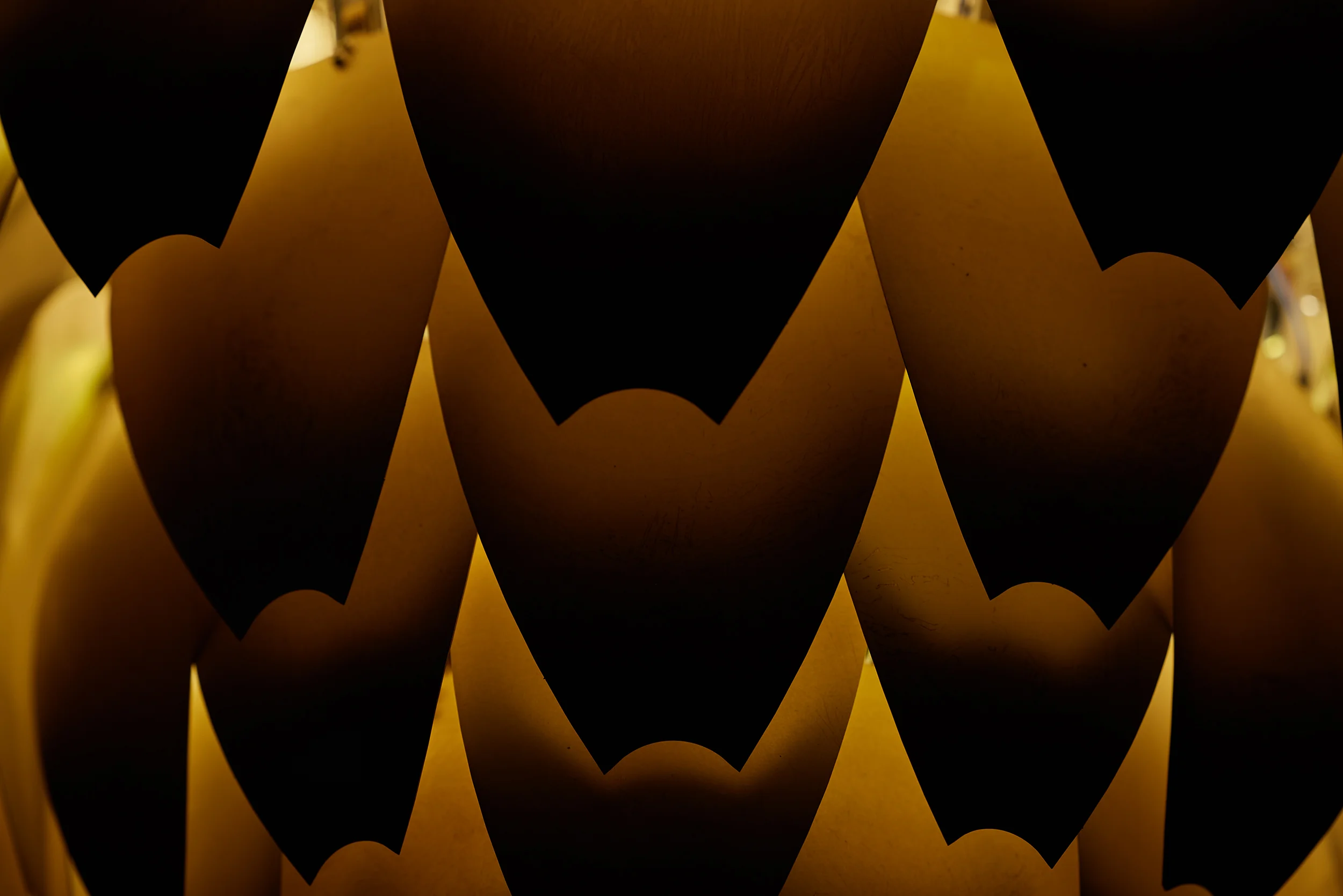

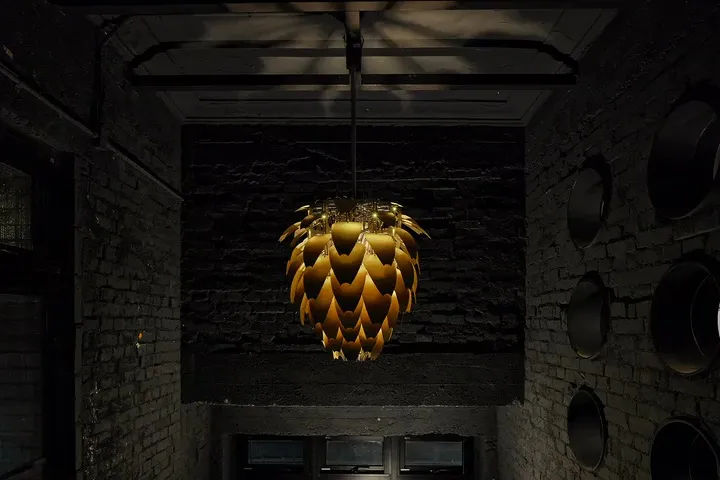
“The evergreen cone—seed of pine and cypress—has long signified endurance, even immortality. Under the slogan of sustainability, the earth is being reimagined as a cyclical ecosystem. When our senses are surrounded by the signs of revival, and we stand beneath the awakened figure of lungs—expanding and contracting—we are reminded that humanity and all living beings share an equal claim to survival on this planet.”
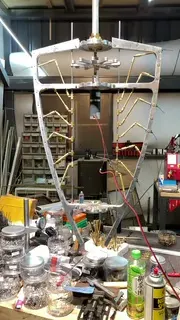
Driven by a kinetic structure, the cone’s scales slowly open and close, echoing the rise and fall of a chest in breath. Rather than biomimetic machine, this work is more accurately described as a somatic-signature mechanism—a machine of bodily traces. Titled Shí CORE, and conceived as a “life symbol” in the form of a hall light, it marks a beginning: the first pulse of a building’s revival after abandonment.
Installed high within a former police outpost built in 1936 during the Japanese era, the piece functions like an implanted artificial heart. It renders the architecture a living body—endowed with heartbeat, endowed with breath—so that the building does not merely stand, but inhales and returns.
“The evergreen cone—seed of pine and cypress—has long signified endurance, even immortality. Under the slogan of sustainability, the earth is being reimagined as a cyclical ecosystem. When our senses are surrounded by the signs of revival, and we stand beneath the awakened figure of lungs—expanding and contracting—we are reminded that humanity and all living beings share an equal claim to survival on this planet.”
Driven by a kinetic structure, the cone’s scales slowly open and close, echoing the rise and fall of a chest in breath. Rather than biomimetic machine, this work is more accurately described as a somatic-signature mechanism—a machine of bodily traces. Titled Shí CORE, and conceived as a “life symbol” in the form of a hall light, it marks a beginning: the first pulse of a building’s revival after abandonment.
Installed high within a former police outpost built in 1936 during the Japanese era, the piece functions like an implanted artificial heart. It renders the architecture a living body—endowed with heartbeat, endowed with breath—so that the building does not merely stand, but inhales and returns.
Hsin Lee’s work has a rare ability: she makes the invisible feel structurally real. Working with mirror-polished metals, titanium finishes, 316 stainless steel, nylon, and mixed media—often edged with the luster of jewelry relief, gold leaf, and crystal-like sparkle—she translates energy, time, humidity, and conviction into forms you can actually walk around, stand before, and sense in your body. Her practice lives in the in-between: stability and flux, matter and emotion, order and metamorphosis—held in a precise, deliberate tension.
In AUSPICIOUS, five supple branches become an introverted yet curious guardian of good fortune. It brushes the water curtain, steps lightly across a still surface, and lets its reflection drift outward—so a quiet, invisible steadiness seems to settle into the site. In Supercritical Fluid, she borrows the scientific language of phase states to speak about contemporary life: a stability produced by continual change, neither liquid nor gas, yet carrying the traits of both—an exact metaphor for living inside uncertainty. And in her Rooted Legacy works, she fuses the image of the tree with jewel-like surfaces: inheritance, roots, and memory set into a form that reads at once as a collectible object and as a place for the spirit to pause.
Hsin Lee isn’t simply making objects. She’s sculpting a shared sensation—letting the weight of the everyday catch the light, turning “steadiness” into something you can approach, and allowing belief to take root, quietly, inside form.